The smash technique, step by step
The smash isn't marketing. It's a specific cooking method:
- A ball of beef, not a patty. It starts as a loose ball of fresh beef, not packed tight.
- A very hot griddle. The steel surface has to be at high heat before the beef touches it.
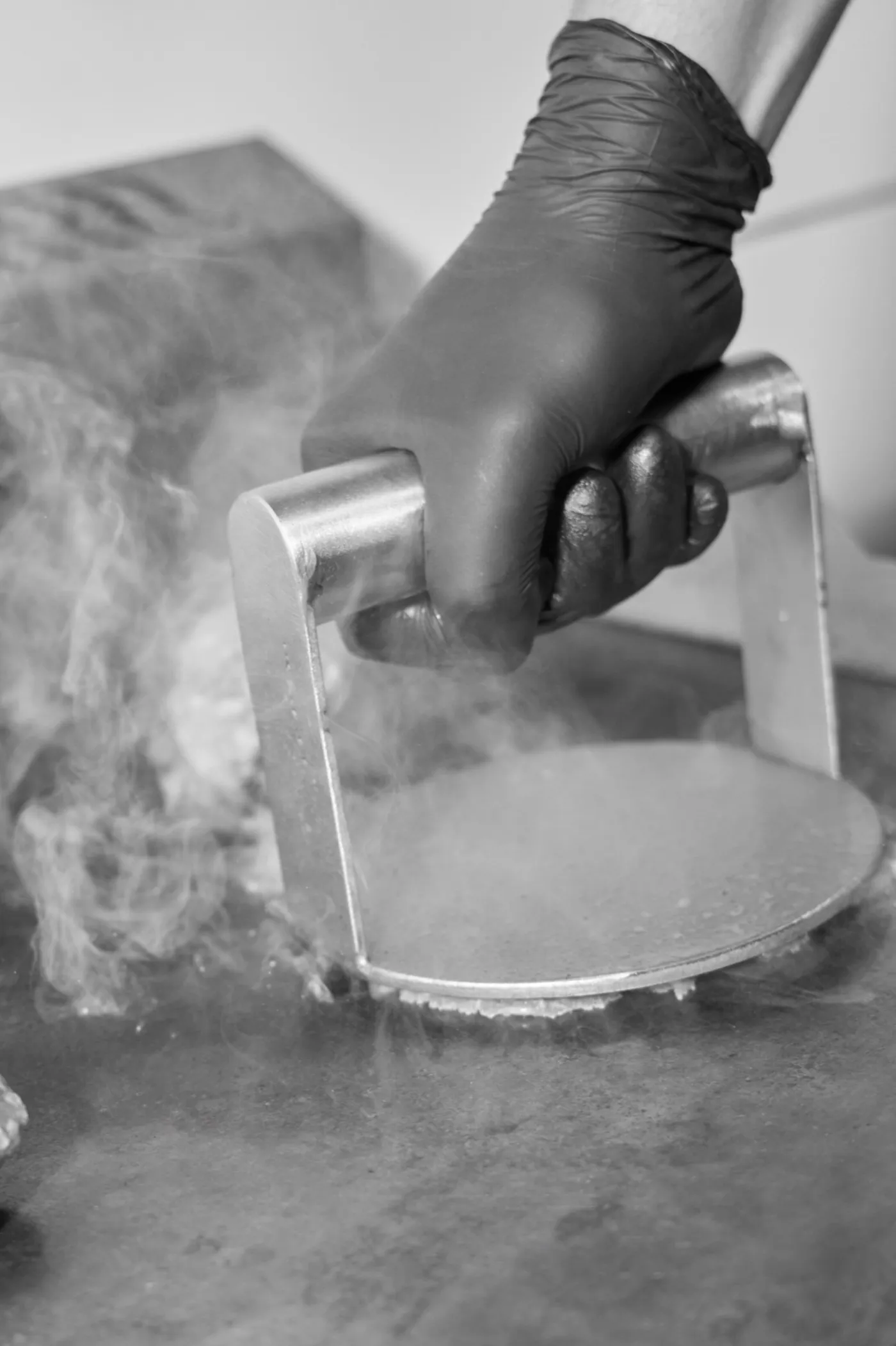
- The smash. In the first few seconds the ball is pressed down hard to spread it into a thin layer and maximize contact with the heat.
- One flip. It cooks until the crust forms, gets flipped once, the cheese melts and it's done.
It all happens fast. That speed is what allows an intense crust without drying out the inside.
Why does it taste different?
The key is the Maillard reaction: the browning that happens when the beef's proteins and sugars cook at high heat. Smashing the beef against the griddle multiplies the browned surface and forms a rough crust with ragged edges and loads of flavor.
That crust is the signature of the smash burger. It's what sets it apart from a thick burger cooked on a grill.
the crust says it all.
Smash vs thick burger
A traditional thick burger prioritizes a juicy center and doneness. The smash burger prioritizes the surface: more crust, more browned flavor, a crispy texture in every bite. We go into detail in smash burger vs traditional burger.
The smash burger in Lima
Blast was born from an obsession: Lima had no real smash, with a truly rough crust and ragged edges straight off the griddle. So we made one. Today we're Top 3 at Burger Fest 2025 and we serve the smash burger in Miraflores and Barranco, plus delivery to La Molina, San Borja and Magdalena.